
Rosehips: Hot Cocoa, Protein Balls, and Winter Medicine
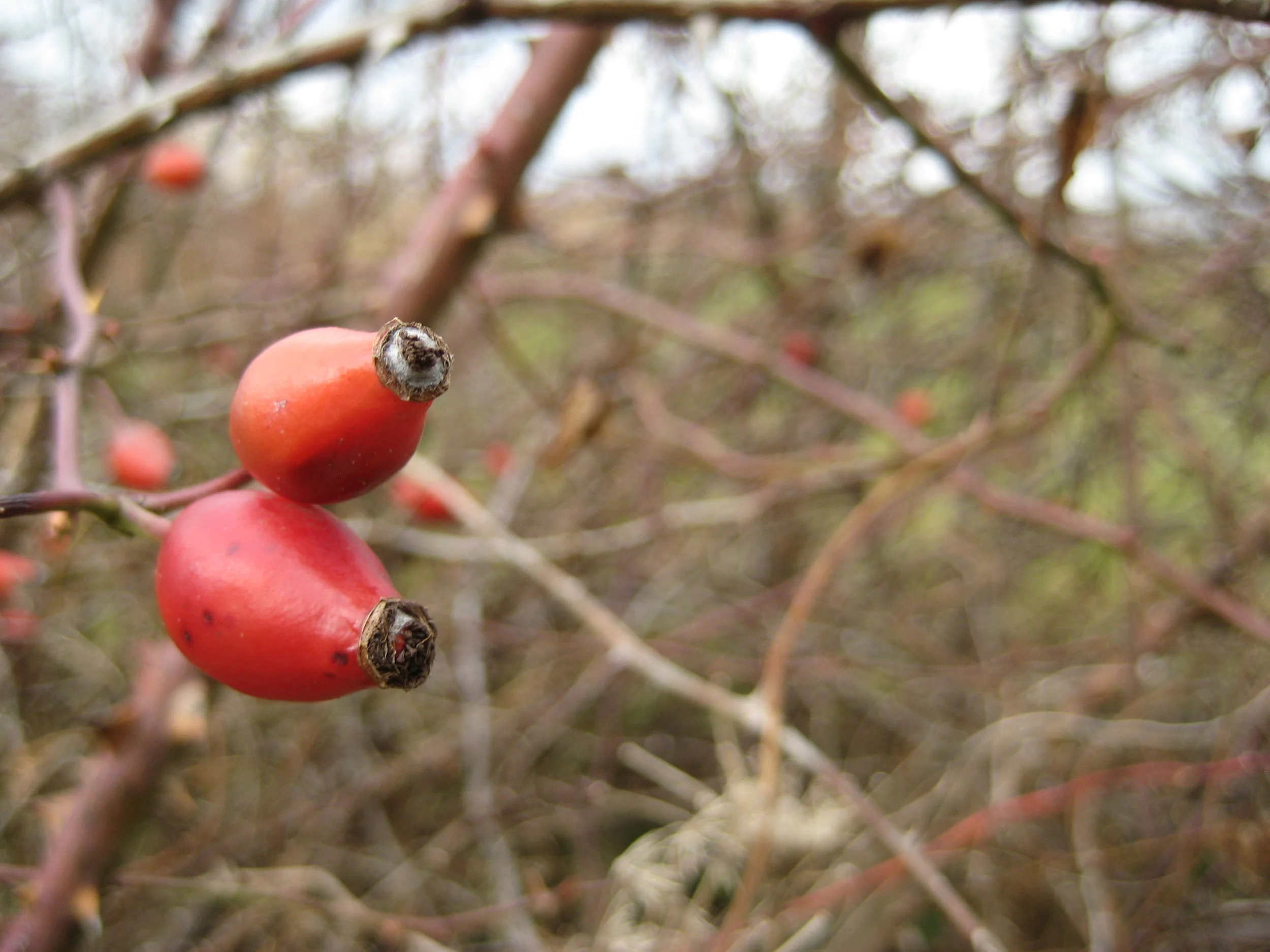
Photo: Wild rosehips in WNY.
As Winter Solstice passes, I’ve been regularly turning to rosehips. Hips are the fruit that forms after rose flowers pass. They add pleasant, fruity tang to hot beverages, elderberry syrup, oatmeal, yogurt, and more—not to mention medicinal benefits perfectly suited to winter.
Roses near and far

Photo: Huge rosehips (Rosa rugosa) in a garden near Kraków, Poland.
There are over 300 species of roses around the world, and many thousands of cultivars (source). Whether wild or coiffed in the garden, every one of them is edible and gently medicinal—so long as they haven’t been sprayed with garden chemicals. (Roses are susceptible to fungal disease—especially when grown where they’re not adapted to the climate.)
On winter hikes, multiflora rosehips (Rosa multiflora) are like rubies against a white and brown backdrop. (Even invasive species can be beautiful!). After a few frosts, they sweeten up and taste like strawberries. I suck on the tender flesh and pocket the seeds to toss in the garbage when I get home, rather than distributing invasive seeds in the forest.
The native swamp rose (Rosa palustris) in my garden forms much larger hips and intoxicating aromatic pink flowers. I highly recommend this species for moist corners of the garden.
Food + Medicine
What I love most about rosehips is that they’re a gentle, safe, nutritious food. When eaten fresh, rosehips are extremely high in Vitamin C.
Though Vitamin C degrades quickly after harvest/drying, rosehips offer a wealth of other nutrients and healthy compounds. They’re a good source of calcium, magnesium, potassium, and a range of antioxidants (beta-carotene, quercetin, tocopherols, lycopene, and more) (source). Flavonoids (antioxidants) are available whether rosehips are eaten fresh, dried, or cooked.
Herbalist Rosalee de la Forêt teaches about rosehips’ ability to modulate chronic and systemic inflammation (source). She writes: “Studies have shown that regular ingestion of rose hips can decrease the pain and inflammation associated with both osteoarthritis and rheumatoid arthritis” (source). Since my farmer husband and I both get achy in the winter, we’ve been upping the ante.
For dry and irritated tissue—such as many upper respiratory tracts in winter—herbs that are both astringent and mucilaginous (demulcent) are gold. Astringent tannins tighten and tone tissue, reducing inflammation and redness. Mucilage—aka plant slime—coats, protects, and soothes inflamed tissue. Aloe vera applied to a sunburn is a popular example. Put tannins and mucilage together in one herb, and you have a fantastic supporter of healthy tissue and faster healing.
Rosehips offer both tannins and a demulcent quality. Though their fruity pectins aren’t technically mucilage (source), they have a gel-like consistency that serves the same purpose (source). Moist, supple tissue is less susceptible to winter infection than dry, irritated tissue, making rosehips a fine winter companion.
Both tannins and mucilage (or pectin) soothe tissue best when they come in direct contact. Ingesting food or drink containing rosehips gives a sore throat a front row seat.
Using rosehips
Don’t have rosehips on hand? No problem! Both of my recipes below call for powdered rosehips, which I purchase in bulk from companies like Mountain Rose Herbs, Starwest Botanicals, or Frontier Co-op. These companies sell dried whole rosehips and de-seeded rosehips, too.
Due to their tough, scratchy seeds, I use whole rosehips in concoctions where the herb will be strained out, such as elderberry syrup and herbal teas.
I hope you enjoy the recipes below!

Photo: Rosehip hot cocoa with a cardamom pod.
Rosehip Hot Cocoa
Makes one 12-oz mug.
Ingredients:
12 oz milk of choice. If you’re using non-dairy, I suggest adding 1/2 Tbsp coconut oil. You could also use 1/3 C canned full-fat coconut milk and top it off with water.
2 tsp cocoa powder
1 tsp rosehip powder
1-2 Tbsp maple syrup or honey, to taste
pinch of salt
Optional: cardamom pod
Heat liquid and sweetener to near-simmer, stirring frequently. Sprinkle in the cocoa, rosehips, and salt and stir. Remove from heat. Blenderize hot cocoa with an immersion blender or tabletop blender. Enjoy immediately.
After trying the basic recipe, feel free to get fancy with a dash of cinnamon or ginger powder, or a pinch of cayenne.
Rosehip Protein Balls
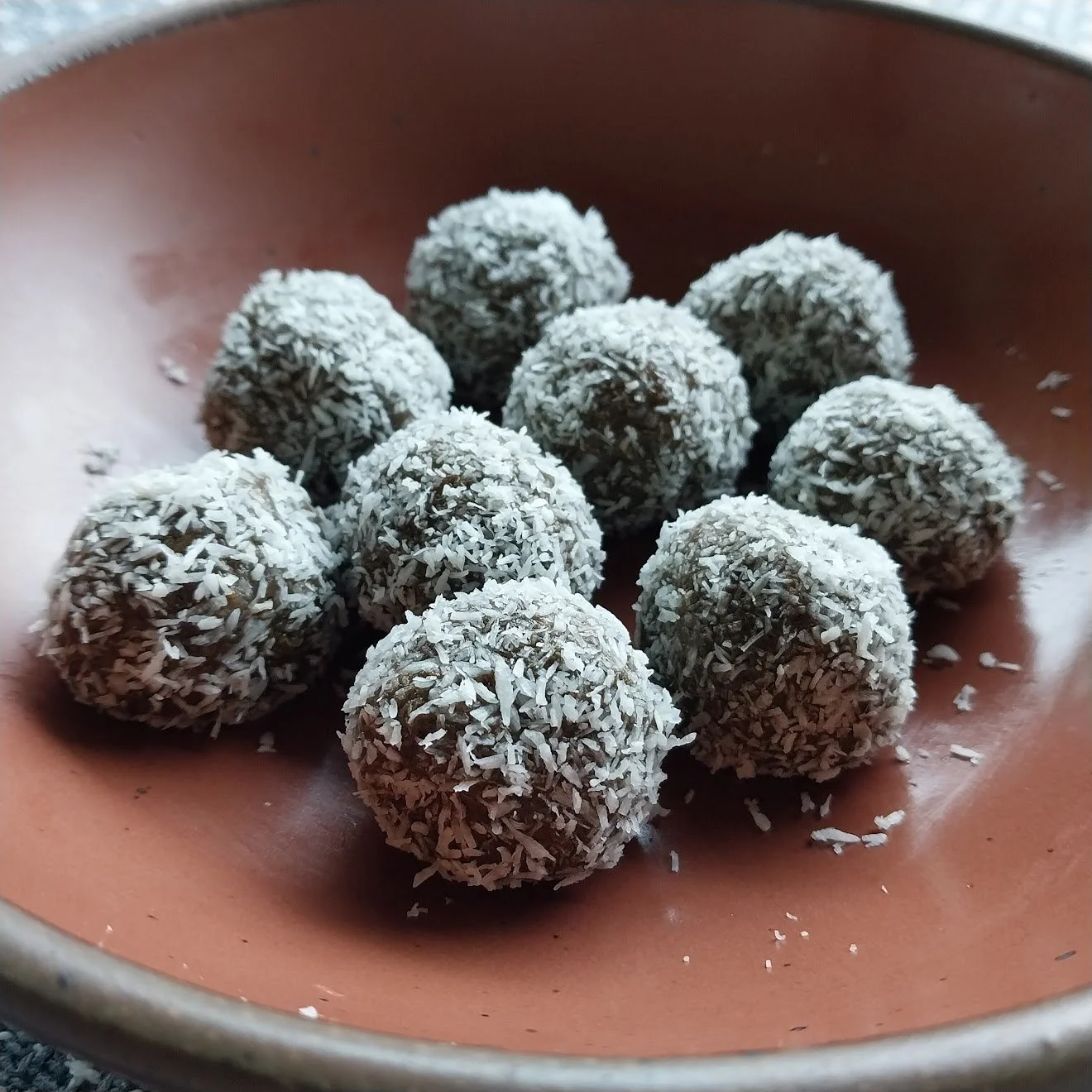
Photo: Rosehip balls rolled in shredded coconut.
Adapted from a recipe I created for Native Culinary Herbs: Online Gardening Course using anise hyssop powder (yumm!), this variation is delicious with tangy rosehip powder subbed in.
You can think of these balls as a healthy, protein-rich snack or a unique dessert. They’re ideal for care packages for loved ones.
Ingredients:
⅓ C (79 mL) rosehip powder
½ cup (118 mL) nut butter of choice (ex. peanut, cashew, and/or almond)
¼ C (59 mL) tahini
⅓ C (79 mL) honey or agave
1.5 Tbsp (22 mL) cocoa powder
If nut butter is unsalted: add 1/4—1/2 tsp (1.5—2.5 mL) salt, to taste
Optional topping: rosehip powder for extra tang, cocoa powder, or unsweetened shredded coconut
Stir the nut butter, tahini, and honey/agave together in a mixing bowl. Sprinkle in the powders and salt. Stir well to combine.
Use a spoon to scoop the mixture and roll into balls. I like 2 tsp-1 Tbsp-sized balls (10-15 mL).
Optional: Roll finished balls in topping of choice. Enjoy!
Refrigerate and use within a week, or freeze. I think they’re best enjoyed cold out of the fridge.