
Orange Peel: Bright Winter Medicine

Photo: Orange peel in a soothing winter tea blend with marshmallow root, tulsi, calendula flower, passionflower, chamomile, and a touch of lavender.
As herbs die back in my garden with late-autumn temps, I turn to orange peel for its cheery medicine.
I get a kick out of using less conventional plant parts for food and remedies. Raspberry season isn’t just when it’s fruiting—we harvest raspberry leaves in spring and summer for mild, mineral-rich teas.
Likewise, I purchase oranges in winter not just for the soft flesh. Every orange peel gets added to tea, elderberry syrup, delicious tinctures, or zested into salad dressings and other dishes.
What’s so special about orange peel?
Aromatic Oils
If you’ve ever zested an orange, you know that the colored part of the peel is rich in aromatic oils. These small compounds easily float into the air—straight into our noses for us to enjoy. They can cross the blood-brain barrier, further impacting our mood. Research increasingly points to the benefits of aromatherapy. “Many citrus essential oils, such as orange [17] and bitter orange [18,19] have shown anxiolytic, antidepressant, anticonvulsant, analgesic, and sedative effects and influence overall emotional behavior” (source).
Aromatic oils also lend digestive support. These “warming” oils stimulate the lining of the gastrointestinal tract, which can support nutrient absorption. Herbalists also know that aromatic herbs are carminative—they move gas through the digestive tract and ease bloating.
Orange’s essential oils are composed largely of d-limonene (source)—a popular remedy for heartburn and GERD. d-limonene is also a good source of antioxidants (source), which can support cardiovascular health and healthy aging.
Bitter Compounds
In my article Beautiful Bitters, I explore the benefits of bitter flavors for the digestive tract and more. Bitters have been shown to stimulate healthy digestive function—from salivation to digestive enzyme production to peristalsis (which supports regular bowel movements) to bile production for processing dietary fat.
Because aromatic and bitter herbs each have unique ways of supporting digestion, herbs that possess both of these qualities are my favorite digestive remedies. Orange peel is at the top of my list!
Due to the link between digestion and relaxation in the parasympathetic nervous system (“rest and digest mode”), some bitters may bring a sense of calm and ease anxiety.
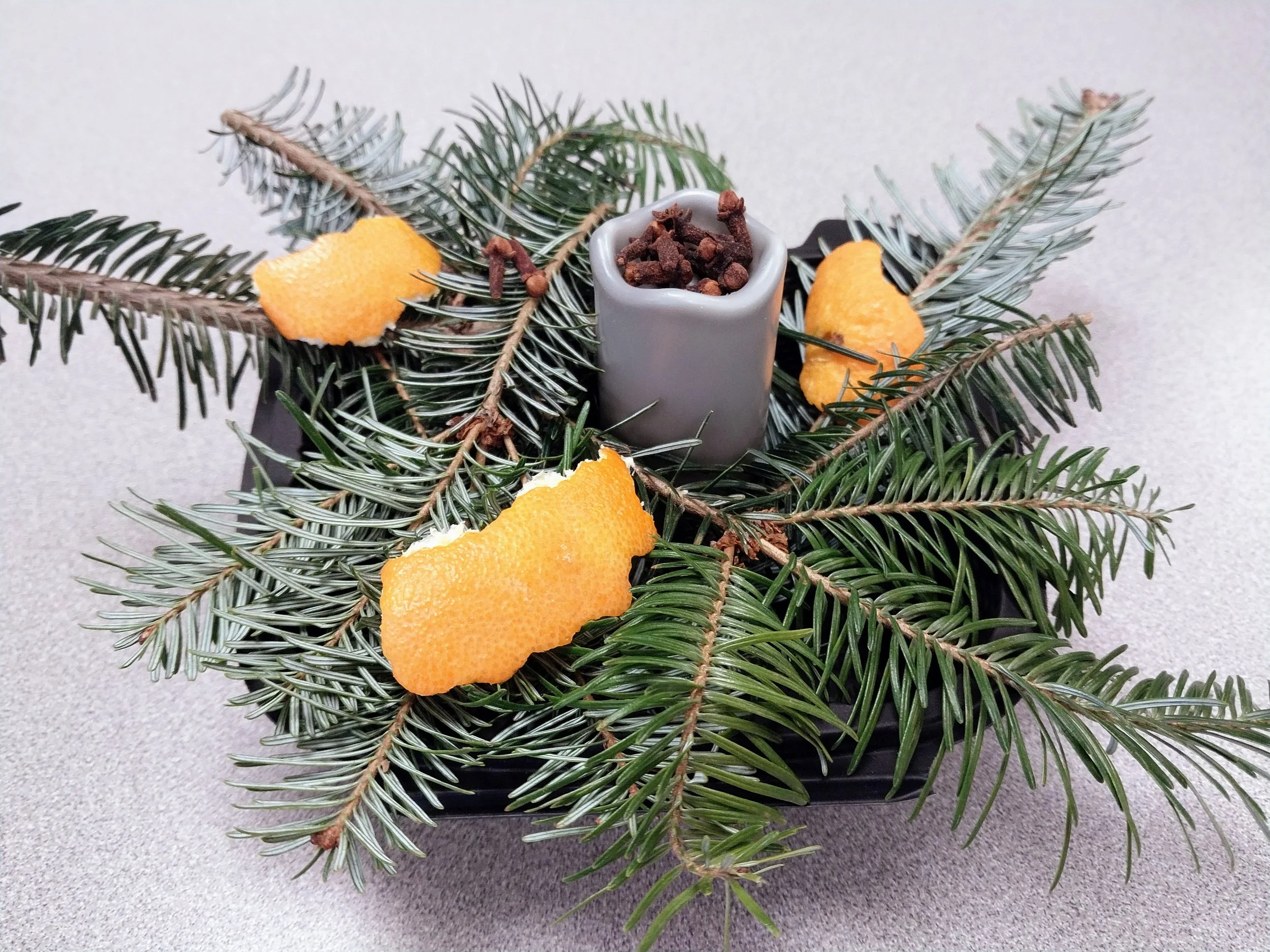
Photo: At my weekly Beautiful Blooms Garden Program at Aspire of WNY (Lakewood), participants created winter potpourri using fresh evergreens, cinnamon sticks, cloves, and fresh orange peel.
Uses
Orange Zest
Orange zest (the bright orange layer) is the more aromatic part of the peel. The pithy white part tends to be more bitter.
I use orange zest in cooking, capturing that uplifting orange scent (and Vitamin C!) without the toughness of the peel.
I particularly love adding orange zest to homemade salad dressings. Here’s a simple salad dressing recipe:
1/2 C extra virgin olive oil
1/4 C balsamic vinegar
1-2 Tbsp honey or maple syrup
1 Tbsp orange zest (I use a microplane/zester)
Whisk or blenderize to combine. Store in the fridge for up to 2 weeks.
Whole Peel
For medicinal purposes (and for greater flavor complexity), I use the entire orange peel. Below are some of my favorite uses; you can use dried or fresh peel:
Teas: Mix small pieces of dried peel into loose leaf tea blends, or drop a chunk of peel straight into your mug.
Elderberry Syrup: I add 3 Tbsp fresh or 1.5 Tbsp dried orange peel to this simple elderberry syrup recipe. That’s the amount I add to my Tangy Hibiscus Elderberry Syrup Kits.
Tincture: Orange peel tincture is wonderful as cocktail bitters or a medicinal digestive tonic. If you’re new to using bitters, orange peel is a mild and tasty one to start with. Feel free to mix it with other bitter herbs, or use it “straight.” This basic tincture recipe will help you create your tincture. Try adding 1/4 to 1/2 tsp to fancy mixed drinks, or plain bubbly water.
Selecting Oranges
When consuming citrus peels, it’s particularly important to purchase organic fruit. In tests they commissioned, Environmental Working Group found hormone-disrupting fungicides (imazalil and/or thiabendazole) on almost 90 percent of non-organic citrus fruit samples (source). I imagine that conventional agricultural practices assume consumers will discard the peels—not eat them.
Even with organic citrus, I make sure to wash the fruit before using the peel.
Feel free to use any organic orange variety at your local grocery store (or farmers market/garden)—or any organic citrus, for that matter! Grapefruit, lemons, and mandarin oranges are also lovely.