

Herb-infused vinegars make delicious additions to salads, marinades, and more. Since vinegar does a great job of dissolving minerals, herbal vinegars are also nutritious.
Some of my favorite herbal vinegars are made with holy basil, wild spring onions or chives, bee balm leaves + flowers, rosemary, spicebush leaves or fruit, and lemon balm, and lemon verbena. Experiment with herbs you love!
Below are basic instructions for preparing herb-infused vinegars.
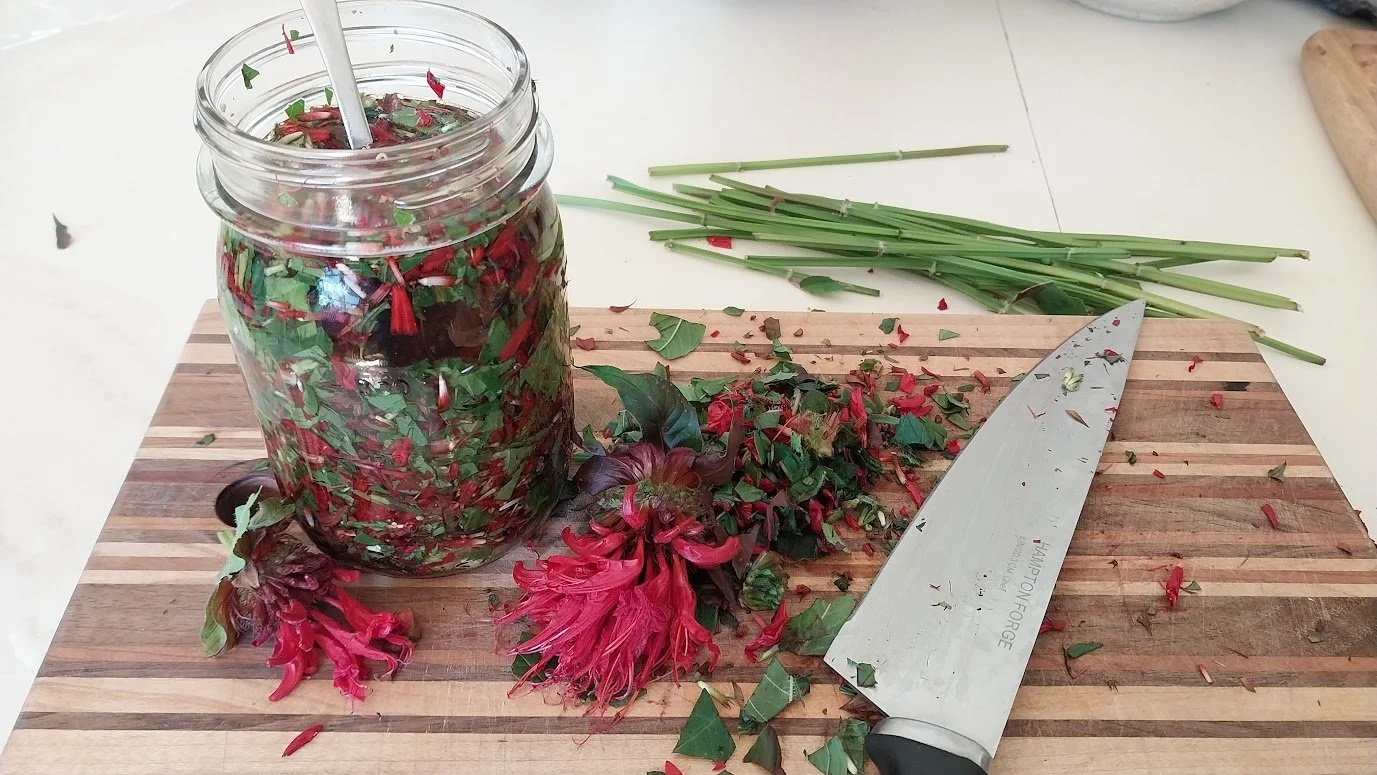
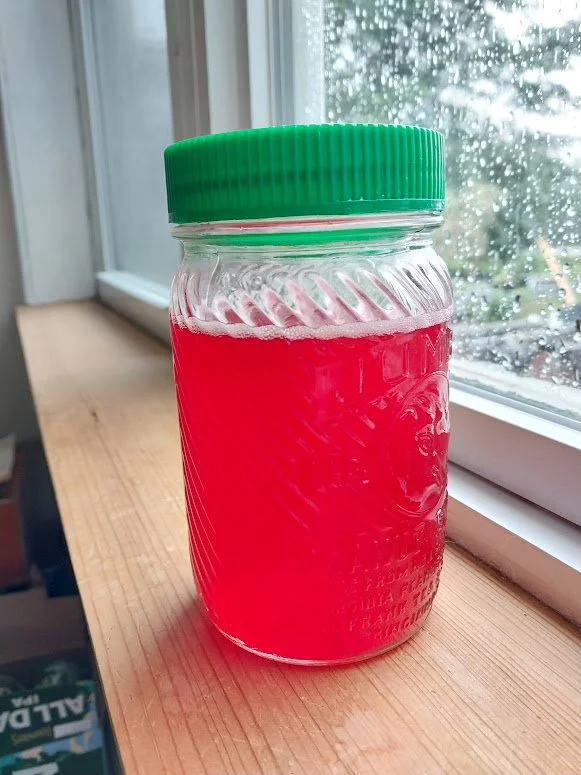
Photos above: Fresh bee balm (Monarda didyma) vinegar in process, and the beautiful final product. Made with white wine vinegar.
Photos and recipe from Native Culinary Herbs: Online Gardening Course.
Basic Herb-Infused Vinegar Recipe
Ingredients + Materials
Vinegar of choice (I like balsamic vinegar, rice vinegar, and white wine vinegar)
Fresh or dried herbs of choice
I love rosemary, holy basil, oregano, bee balm, wild bergamot, chives, spicebush, and lemon balm
Mason jar with plastic lid, and/or metal lid with wax paper
Cheese cloth or fine sieve for straining
Instructions
1.) Chop herbs and place in mason jar:
If using fresh herbs: fill jar halfway with plant material.
If using dried herbs: fill jar 1/4 - 1/3 of the way.
2.) Top off jar with vinegar and secure lid. If using a metal lid, place wax paper between jar and lid to prevent corrosion.
3.) Shake daily (or as often as you remember).
4.) After about 2 weeks, strain out plant material and compost it.
5.) Place herbal vinegar into a glass jar or bottle for long-term storage. I prefer to ditch the metal lid + wax paper at this point, since vinegar can eat through wax paper. Use a plastic lid or pour your herb-infused vinegar back into the original vinegar bottle.
6.) Storage:
Vinegar infused with dried herbs: Store in a cool, dark place for up to a year.
Vinegar infused with fresh herbs: Refrigerate and use within 3-6 months.